

Re:McDonald's
Location: Guatemala City, Guatemala
Type: Architecture
Year: 2024
Designed under SHOARQ
Team: Cristina Echeverría, Esteban Orozco & Gerson Pocón
A proposal for a sustainable and
human-centered experience.


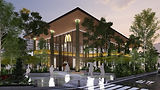
This project reimagines the traditional McDonald’s typology, exploring how fast-food architecture can evolve toward sustainability, transparency, and urban connection.
The design reflects a shift in values, from speed and consumption to presence and awareness.
The architecture integrates biophilic principles, natural light, and vegetation to create a calm, inviting atmosphere that reconnects users with nature and community.
By merging ecological design, human comfort, and spatial experience, this project envisions the future of everyday architecture, one that nourishes both people and place.
Design Concept
The design seeks harmony between architecture, nature, and city life.
Conceived as a small urban oasis, it integrates vegetation, permeable surfaces, and natural shading as part of its language.
Spatial Strategy
With a 580 m² footprint, the project integrates dining areas, McCafé, terraces, and play zones organized through fluid circulation.
Outdoor spaces expand into a 700 m² landscaped park that connects the restaurant with the city.
Materials and Sustainability
Materials were chosen for their environmental performance and sensory quality.
Steel, concrete, wood, and glass combine with vegetation and eco-pavers to create a balance between industrial efficiency and natural comfort.
Urban Extension
Beyond its function as a restaurant, the project becomes a public extension of the city, integrating shaded seating, bike access, and EV charging stations.
It encourages interaction and sustainability at a neighborhood scale.

A Landscape for the senses.
The project’s outdoor areas were designed as immersive spaces that invite people to slow down and reconnect.
Vegetation, water, and custom furniture shape an atmosphere of calm within the urban setting, creating a place where nature feels present and alive.
Here, the fast-food experience turns into something different, a quiet pause shared between people, city, and landscape.


A Dialogue Between Architecture and Nature.
The plan was conceived around fluid movement and visual openness.
Each program, dining, McCafé, playground, and terraces, connects seamlessly through soft transitions that encourage exploration and interaction.
Green corridors, shaded seating, and open sightlines create a continuous experience between interior and exterior, turning the building into both a destination and a passage within the city.


