
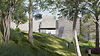
Kaminaljuyú Museum
Location: Guatemala City
Type: Architecture
Year: 2018
Context: Academic
How can we reconnect a contemporary city with the ancient roots beneath its surface?
Beneath what we know today as Guatemala City lie the buried remains of Kaminaljuyú, a great Mayan city built more than two thousand years ago around the now-vanished Lake Miraflores. Once one of the most important urban centers in Mesoamerica, it flourished as a hub of trade, ceremony, and innovation. After its decline and eventual abandonment, time and growth transformed the valley into what would become the modern city, leaving Kaminaljuyú resting quietly beneath it.
This project reimagines Kaminaljuyú as a space for reconnection, an archaeological park and museum that reveal these hidden layers of history while fostering education, cultural appreciation, and respect for the natural life that now inhabits the site. Designed to be discreet and respectful, it seeks harmony between heritage and habitat, allowing the past, the landscape, and the community to coexist in a living dialogue.
KAMINALJUYÚ TRHOUGH TIME...

The Mayan city of Kaminaljuyú was the first city of the Valley of Guatemala and one of the most important in the entire Mesoamerican territory.
Its history began around 1000 BC, when the first inhabitants arrived attracted by Lake Miraflores, around which numerous earthen pyramids and platforms were built, using the surrounding areas for crops and cultivation.
The site experienced its first major decline after a widespread drought that affected much of Mesoamerica around 200 BC.
The last known occupation of Kaminaljuyú dates to the end of the 9th century AD. During the Postclassic period, the population dispersed to higher and more defensive areas such as the hilltops surrounding the Valley of Guatemala. By then, the site was practically abandoned.Today, only a small part of Kaminaljuyú is preserved within an archaeological park located in Zone 7 of modern Guatemala City. Visitors can still appreciate some of the site’s most important architectural complexes, as well as the wildlife that has found refuge in the park.
Of the more than 200 mounds once recorded, only about 32 remain, as the city’s rapid growth drastically altered the valley’s landscape and heavily impacted the archaeological remains.
The pyramids that can be seen today are partially buried and protected under lightweight roofing structures, as many have not been fully excavated. Several of these ancient constructions remain entirely underground, preserved as earthen mounds that now form part of Kaminaljuyú Park and other green areas scattered across the city.
Kaminaljuyú Park is considered a sacred place by Mayan spiritual guides who continue to perform various ceremonies and rituals, keeping the park alive. Many people visit daily to place offerings and invoke their ancestors for good harvests, health, and well-being.


Although a small museum currently exists on-site, its building lacks the spatial and experiential qualities expected of a contemporary museum, and as a result, it fails to attract visitors.
The proposed new museum, located within Kaminaljuyú Park in Zone 7, seeks to become both a space for the exhibition of Maya artifacts and ceramics found in the area, and a well-equipped workplace for archaeologists conducting research on the site.
Designed to be discreet and respectful, the project aims to coexist harmoniously with the park’s natural landscape, its sacred significance, and the fragile archaeological remains that lie beneath.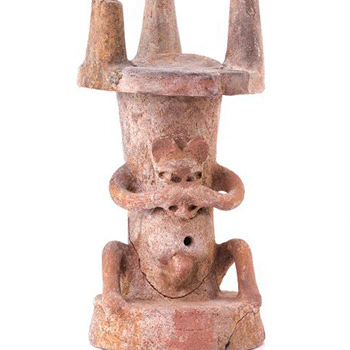


LIFE CYCLES OF KAMINALJUYÚ
Concept
The project reinterprets the life cycles of Kaminaljuyú, the elements that once sustained the ancient city and now inspire the design of the new archaeological park and museum.
Each space echoes one of these cycles, creating a dialogue between past and present, between the sacred landscape that once existed and the living park that now surrounds it.
WATER | Origin
In ancient Kaminaljuyú, water symbolized creation and rebirth. The city emerged around the sacred Lake Miraflores, where canals and vegetation formed an aquatic landscape.
In the new design, water reappears as a subtle boundary, a gesture of respect around ceremonial areas and the museum, reminding visitors of the site’s sacred beginnings.
DEATH | Transformation
For the Mayans, death represented transition rather than an end, a return to the earth where life begins again.
In the museum, this idea is embodied through its mostly underground path, guiding visitors beneath the surface to explore the layers of history that still rest there, transforming descent into discovery.
DAILY LIFE | Community
Everyday life in Kaminaljuyú was built by the hands of ordinary people.
The park honors that collective spirit through spaces for walking, play, and gathering, where community becomes the new form of architecture.
TRADE | Exchange
Kaminaljuyú thrived through both a vibrant local market and far-reaching trade routes that connected it to other Mesoamerican regions.
The museum reflects this duality through its circulation and public spaces, linking internal programs with the city around it.
POLITICAL RELATIONS | Connection
Kaminaljuyú served as a meeting point between distant cultures and regions.
The project mirrors this openness through the community center and museum, spaces that foster dialogue, learning, and collaboration.

“Every city is built upon another, what matters is how we choose to listen.”


